

tggj
THE DIRECTOR

Tmt. G. Chitra Devi, M.A., B.L.,
Director of Prosecution
1989 ஆம் ஆண்டு பாண்டிச்சேரியில் உள்ள டாக்டர் அம்பேத்கர் அரசு சட்டக் கல்லூரியில் சட்டத்தில் இளங்கலைப் பட்டப்படிப்பை முடித்த பிறகு, சென்னை உயர்நீதிமன்றத்தில் வழக்கறிஞராகப் பயிற்சியைத் தொடங்கினார். அவர் பல முக்கியமான வழக்குகளில் நீதியைப் பாதுகாப்பதில் முக்கியப் பங்காற்றினார் மற்றும் பல வழக்குகள் மூலம் உச்ச நீதிமன்றத்தில் பொதுமக்களின் காரணத்தைப் பிரதிநிதித்துவப்படுத்தியுள்ளார். அவர் 1996 ஆம் ஆண்டில் தரம் II வழக்கறிஞராக அரசாங்க சேவையில் நுழைந்தார், மேலும் அவரது கேரியரில் பல்வேறு பதவிகளை வகித்த பின்னர் 01.04.2020 அன்று வழக்குரைஞர் இயக்குநராக தேர்ந்தெடுக்கப்பட்டார். வழக்குரைஞர் இயக்குநராக அவர் பதவி வகித்த காலத்தில், மாநிலம் முழுவதும் உள்ள வழக்குரைஞர்களின் செயல்பாடுகளைக் கண்காணித்து வருகிறார், பல்வேறு நீதிமன்றங்களில் உள்ள வழக்குகளின் தீர்ப்பை கண்காணித்து, அந்தந்த நீதிமன்றங்களில் வழக்கறிஞர்களின் நடத்தையை ஒழுங்குபடுத்துகிறார். வழக்குத் தொடரும் இயக்குநரே வழக்குத் தொடரும் நிறுவனத்தின் தலைமைச் செயலாளராக உள்ளார் மேலும் அனைத்து வழக்குத் தொடரும் அலுவலர்கள் மீதும் அவருக்குக் கட்டுப்பாட்டு அதிகாரம் உள்ளது. வழக்குரைஞர் இயக்குநர் ஆய்வுக் கூட்டங்களை நடத்துகிறார், மேலும் ஒவ்வொரு மாவட்டத்திலும் வழக்குகள் நடத்தப்படுவதை அவ்வப்போது ஆய்வு செய்கிறார். புலத்தில் உள்ள வழக்குத் தொடரும் அதிகாரிகளின் செயல்பாடுகளை தனிப்பட்ட முறையில் மதிப்பாய்வு செய்ய இயக்குநர் அடிக்கடி களப் பயணங்களை மேற்கொள்வார், மேலும் வழக்குரைஞர்களுக்கு எதிராகப் பெறப்பட்ட முறைகேடு குற்றச்சாட்டு தொடர்பாக விசாரணை செய்யும் கடமையும் அவருக்கு ஒதுக்கப்பட்டுள்ளது. காவல்துறை அதிகாரிகளுடனான ஒருங்கிணைப்பு கூட்டங்களிலும் இயக்குனர் பங்கேற்கிறார், மேலும் உயர் நீதித்துறை மற்றும் மாநில அரசாங்கத்தால் நடத்தப்படும் பல்வேறு மாநாடுகளில் இயக்குனரகத்தைப் பிரதிநிதித்துவப்படுத்துகிறார். அவர் திணைக்களத்தின் முகமாக இருக்கிறார் மற்றும் நேர்மை மற்றும் நேர்மையின் மிக உயர்ந்த ஆணையுடன் தனது நிர்வாகக் கடமைகளை திறம்பட நிறைவேற்றுகிறார்.
Introduction
The aim of the Criminal Justice delivery -system in India is not only to punish the criminal but also to prevent crimes in feature, enabling the people to live in a peaceful society. History reveals that every king in India had his own way of regulating crime under his Kingdom. However there was no codification for punishments of offences, nor did they have any prescribed procedure for the trial. With the advancement of time, offences were codified and a trial procedure was laid down. The present criminal justice system in India was established by the British east India Company during the pre independence era. However after independence it has seen many changes and modifications. Various committees were setup time to time, to recommend changes in this system and suggest measures to control the rate of crime in the country. In the wisdom of the law makers of our country there are now four important components of the criminal justice delivery system which are listed below, which includes Police, Courts, Prosecution and Prison departments
A crime is always committed against the society at large and not against a particular individual. There is always a victim who suffers at the hands of a criminal, but creates fear in the minds of people at large and therefore the State takes cognizance of the offence. The very functioning of the State is based on the concept of “Social Contract theory” which states that the State collects duties and taxes from its people and reciprocally as the duty to maintain the law and order in that society. So whenever a crime leads to disturb the law and order, the state becomes the party to that proceeding and agitates on behalf of the affected victim. The public prosecutor is the face of the State before the courts and is considered as an agent of the State representing the interests of the common man in the Criminal Justice Delivery system.
List of Director's of Prosecution & Nominal Roll of Prosecution
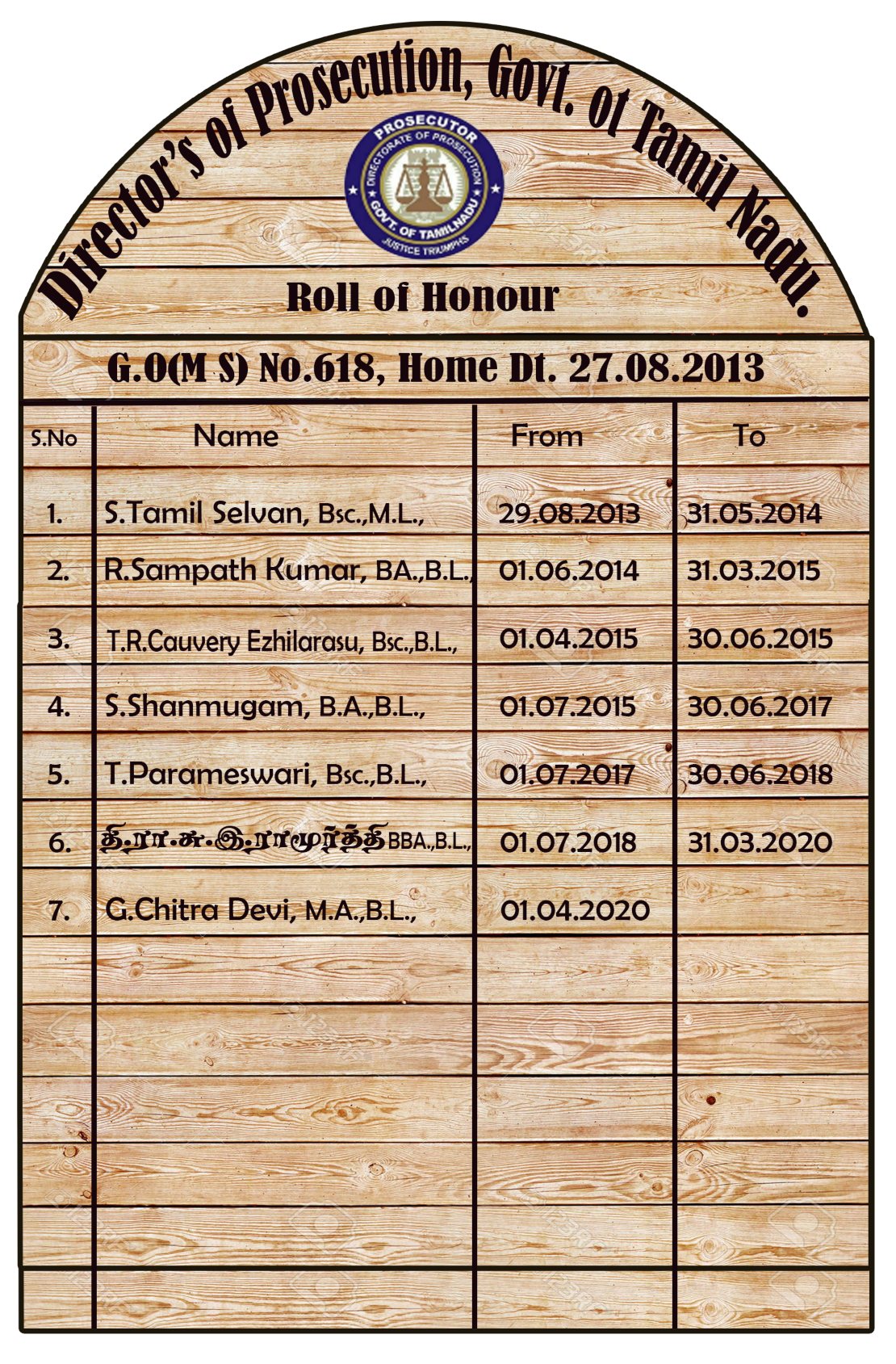
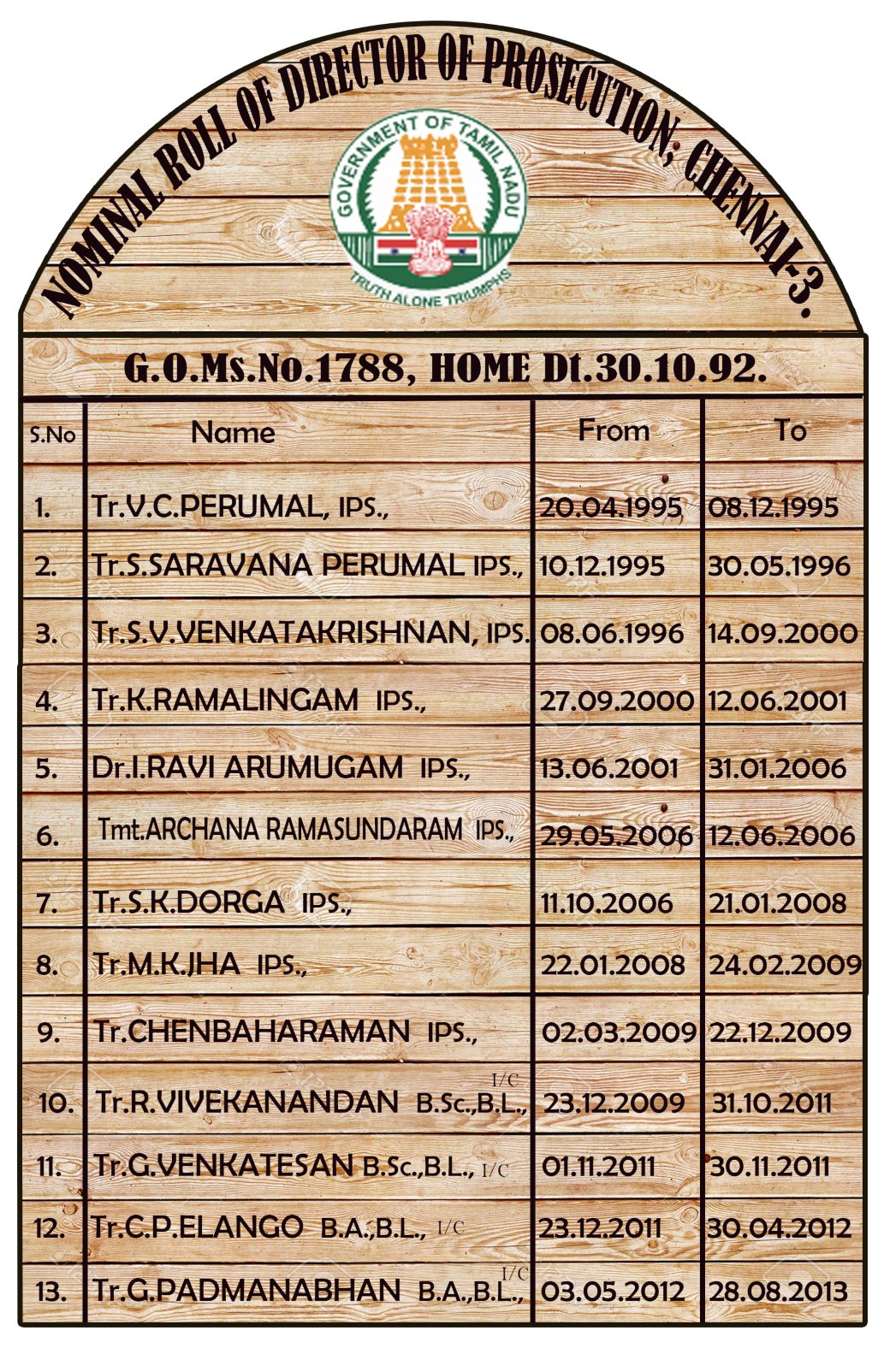
HISTORY AND CONSTITUTION
The Directorate of Prosecution is an independent authority responsible for prosecuting criminal cases throughout the state of Tamil Nadu. It supervisors and monitors the various subordinate courts across the state. The principal function of the directorate of prosecution is to have administrative control over the Prosecution Machinery
The Department of Prosecution in Tamil Nadu was created in the year 1995.
The Directorate of Prosecution has been established by the Government of Tamil Nadu and Presently the Department of Prosecution is headed by The Director of Prosecution. The department functions under the control of Home Department, Government of Tamil Nadu in the name குற்ற வழக்கு தொடர்வு இயக்ககம்.
The Posts of Director of Prosecution, The Joint Director of Prosecution and the posts of the Deputy Director(s) of Prosecution are made by the Government with the concurrence of the Chief Justice of High Court of Madras
Prior to this, the State Government was appointing a Police Officer from the Indian Police Service as Director of Prosecution, thereby bringing all the Prosecutors, subordinate to the said Police Officer.
The legality of the appointment of a Police Officer as the Director of Prosecution was challenged before the Hon’ble High Court Vide Writ Petition (MD) No. 222/2009 and the Hon’ble High Court by way of its order dated 26.11.2009 held that the appointment of a Police Officer as Director of Prosecution is contrary to section 25-A of the Code of Criminal Procedure.
Adhering to the principle of separation of prosecutors from the control or supervision in any form by the Police, which will only invade the independence of the institution of prosecutors, the Director is selected from the Prosecution Department with the concurrence of the Chief Justice of our High Court.
CORE VALUES
OUR CORE VALUES:
The Directorate of Prosecution is committed in providing high quality prosecution service to the victims in criminal cases. The prosecutors defends the interest of the state and not that of the Police. The objective of any criminal trial is to investigate the crime and decide the guilt or the innocence of the accused. It is the prosecutor’s primary responsibility to assist the court in determining the truth of the case, even if it is against the interest of the prosecuting agency. The prosecutors thus carries out his duties in a fair , fearless and responsible manner. The prosecutors plays an independent role at every step of the criminal proceeding in order to unearth the truth before the court of law.
VISION AND MISSION
VISION :
- To establish a Just, fair, and independent agency to prosecute the criminal cases before various courts of law.
- To make a positive difference in the society through the criminal Justice system and provide expeditious pursuit of Justice.
- To establish a dynamic Prosecution Service recognized for its excellence and global standards by creating strong prosecutors.
- To increase the trust of Public on the Prosecuting Institution, discharge of duties through fairness, transparency, accountability, and cooperation.
MISSION:
- To implement policies and the reformations in law as directed by Government and the Judiciary
- Reducing the pendency of cases and increasing the rate of conviction in criminal cases
- Timely service, adoption of sensitive and respectful behavior towards victims and witnesses in the prosecution process
- Effective, Efficient and equitable administration of Justice
- To make a significant contribution to the maintenance of social order and to the establishment of safe and secure society
Responsibility
- To ensure effective prosecution in the entire state of Tamil Nadu, in all cases under trial in all Magistrate Courts and special courts constituted for trial against Legislators and the Special Courts under Protection of Children from sexual Offences Act, other specified special Acts.
INNOVATION
Role of a prosecutor in pre trail stage:-
During the pre-trial stage the police are competent to conduct investigation without any external influence and submit a final report to the court. The report submitted by the investigating officer would be scrutinized by the prosecutor of the concern court as per the order’s of our High Court to ascertain the veracity of the charges alleged by the investigating officer and to evaluate the substantial evidence provided by the investigating officers in support of the charges.
Witness Help Desk
The office of every prosecutor before all magistrate courts, special courts for POCSO and MP/MLA, are construed to be help desks for the victims and witnesses. The prosecutors conducting trail would be present in their respective offices at office hours and the witnesses are free to approach them to have a discussion about their case before or after the court hours.
PROSECUTOR’S RESPONSE:
- Act with integrity, by behaving ethically and professionally and adhering to public service values
- Communicate clearly, both verbally and in writing, and actively listen to others and respond in a respectful way
- Be courageous, by being open and honest, prepared to express professional views and willing to accept and commit to change
- Be accountable, by taking responsibility for actions, adhering to legislation and policy and using resources efficiently
- Be adaptive, by planning and achieving priority outcomes, responding in a flexible manner and participating in initiatives that encourage positive change across the vision
- Promote a supportive environment, by showing respect for diverse backgrounds, experiences and perspectives, accepting differing opinions and views and working collaboratively
- Never stop learning, by adopting and maintaining a commitment to ongoing learning and development.